
Print Is Back
VIBE returns to the newsstand for the first time since 2014 — with A$AP Rocky on the cover.
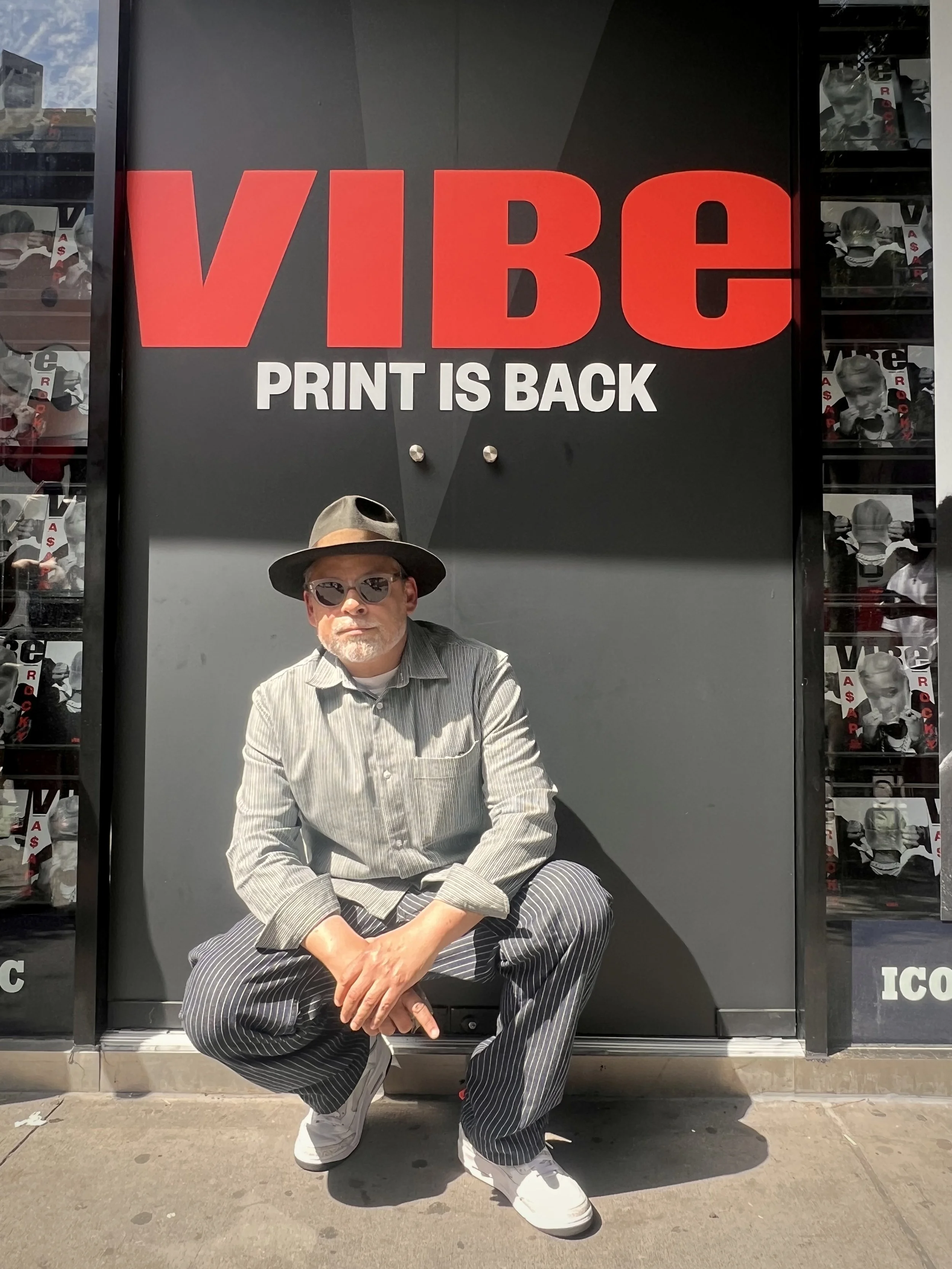
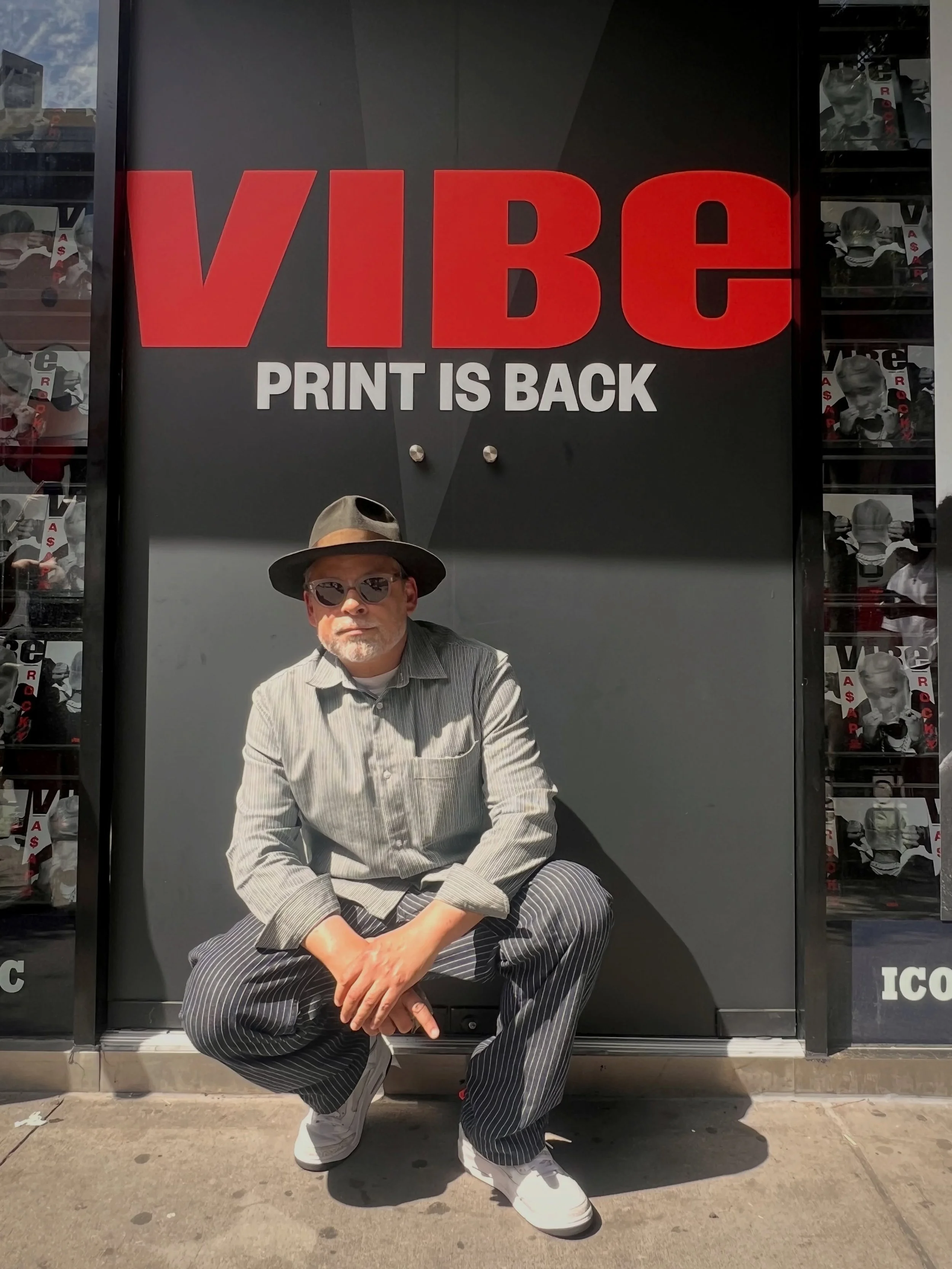
There it is on the newsstand: the VIBE logo in red, Print Is Back underneath in white, and the actual issue racked in rows up and down on either side. A physical object again — a thing you can hold. For a title that had lived only online since 2014, that wall is the whole story before you turn a single page: print is back, and it's back with weight.
I shot the cover.
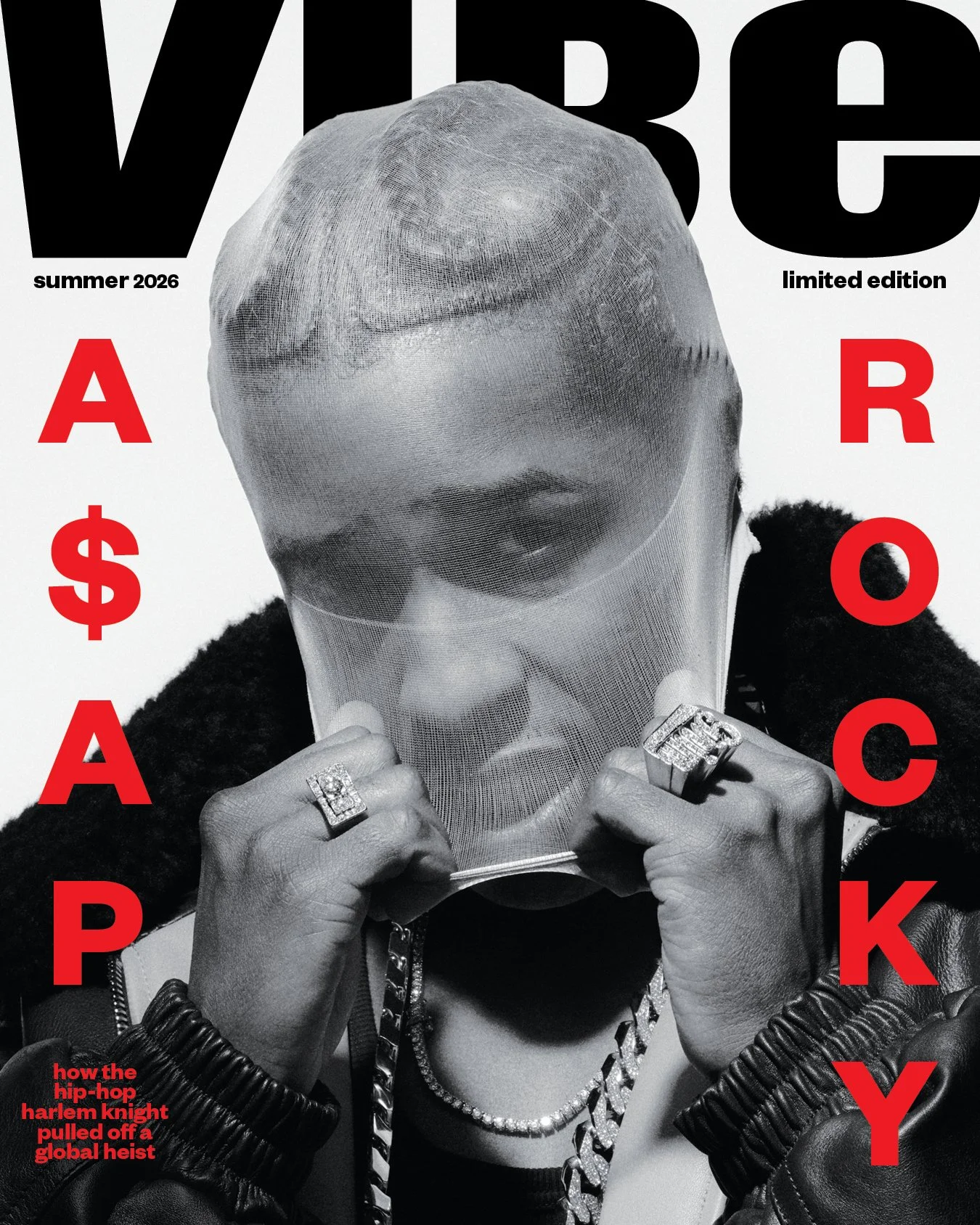
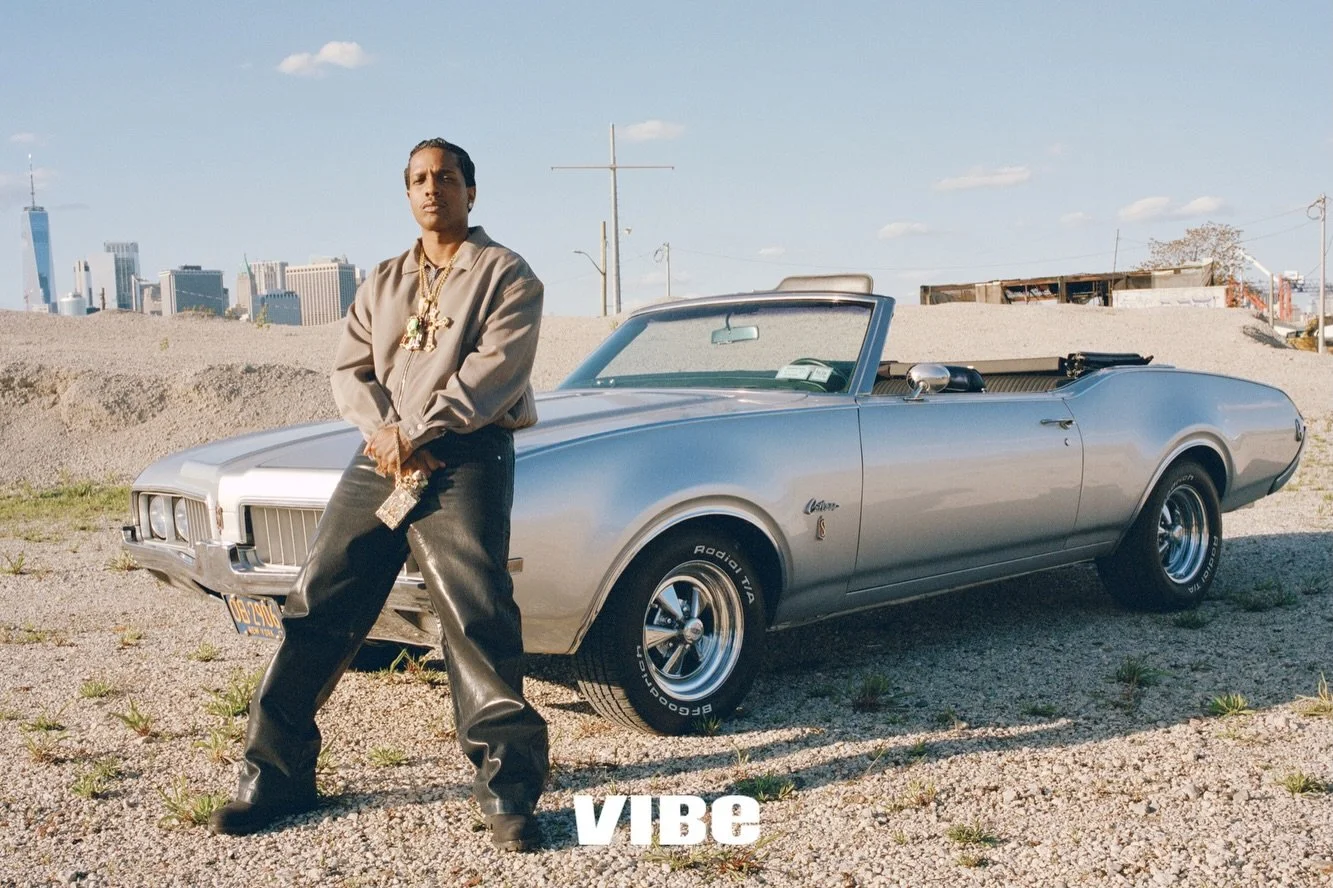
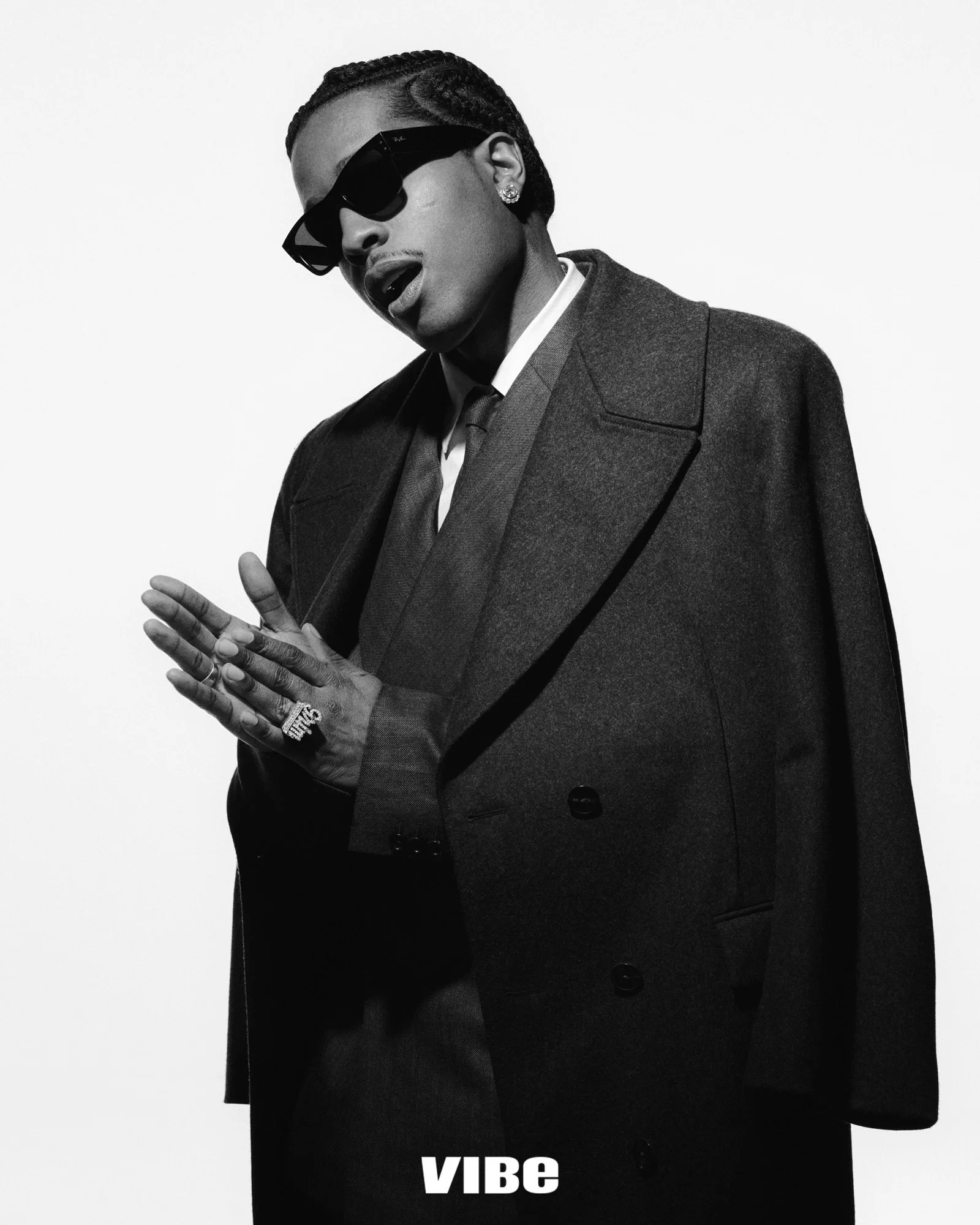
A$AP Rocky. VIBE, summer 2026.
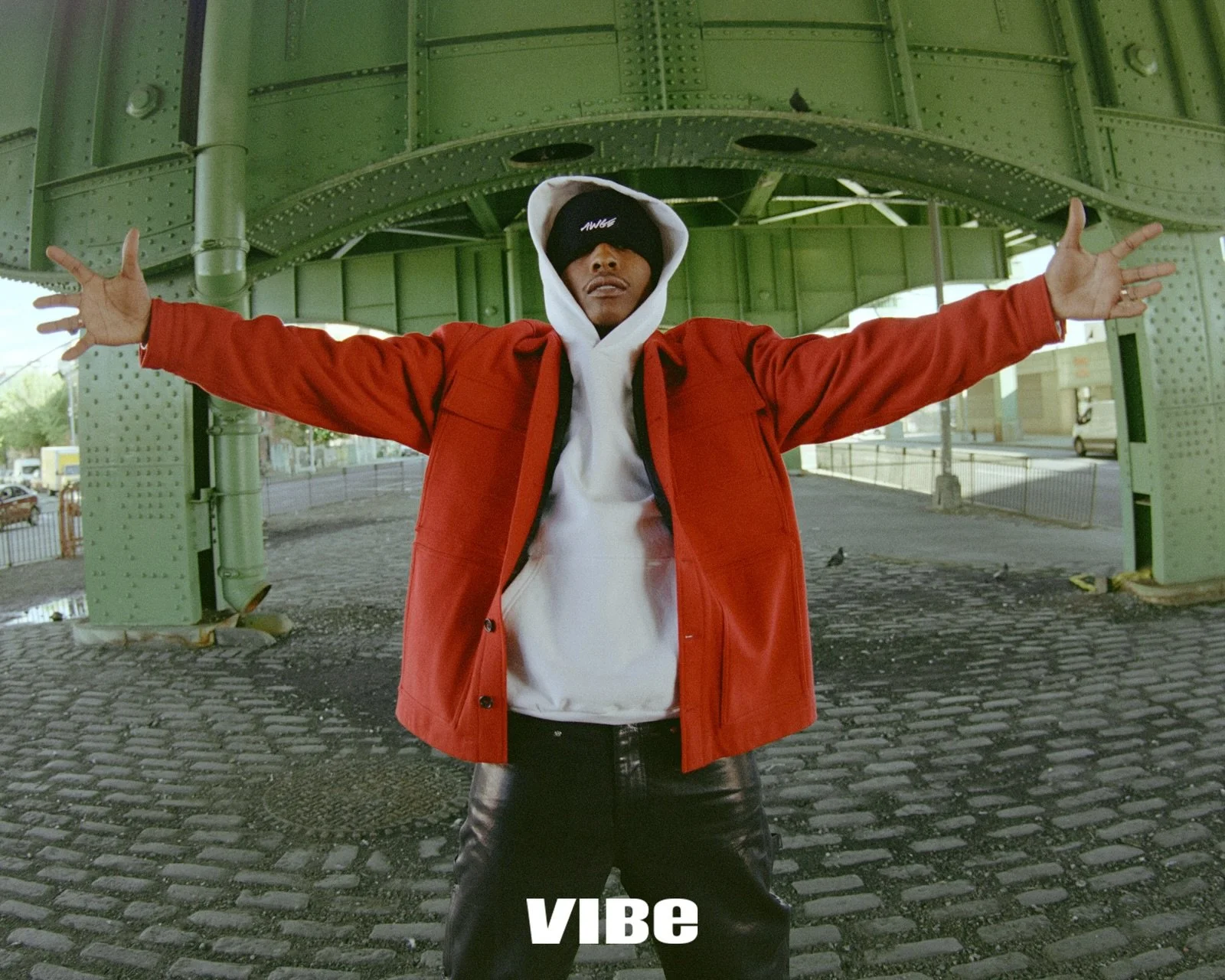
Red on green
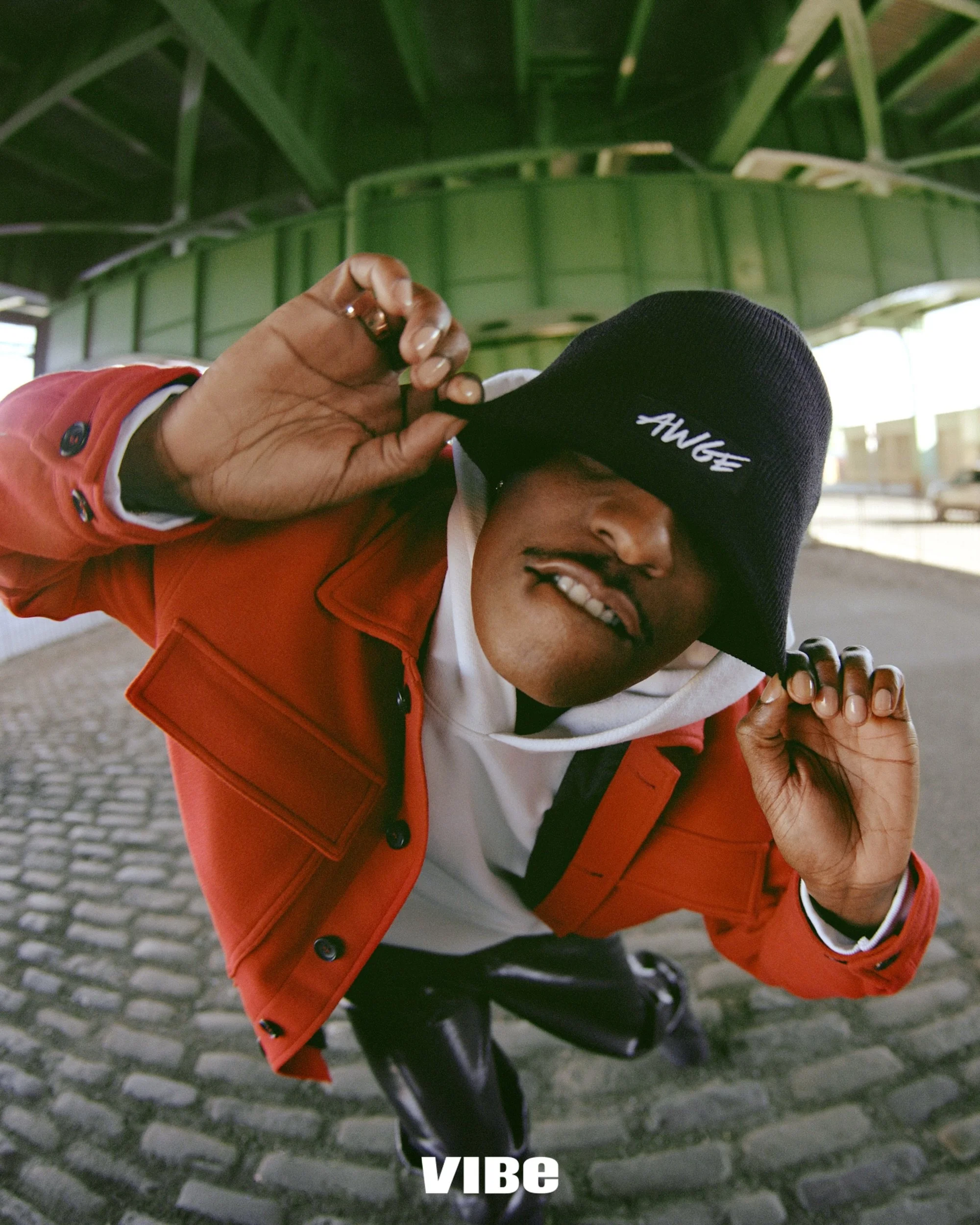
The story opens and closes in the same place: under the Gowanus, red against green.
The first frame is a figure stepping into the lens, both hands to the hat, motion caught mid-decision. The last is that same red against that same green steel, arms stretched wide — the shoot come full circle to where it began.
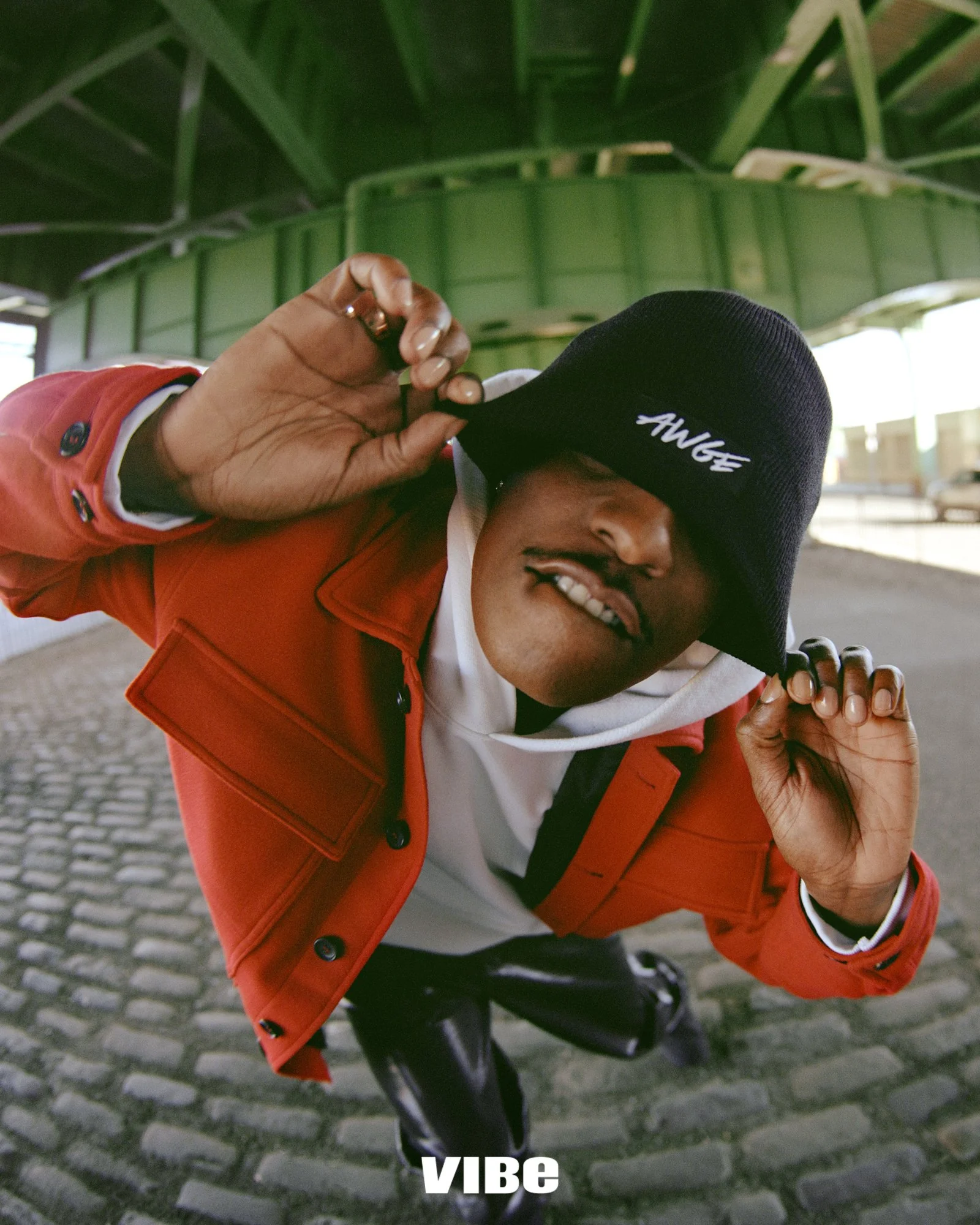
Jamil GS ©
One underpass, one chord. I saw the color before he stepped in — the green of the steel, the red he'd wear against it — and built the frame around it. The subject walks into a picture that already exists. That's the job. Everything between those two frames is the body of the story.
The pieces
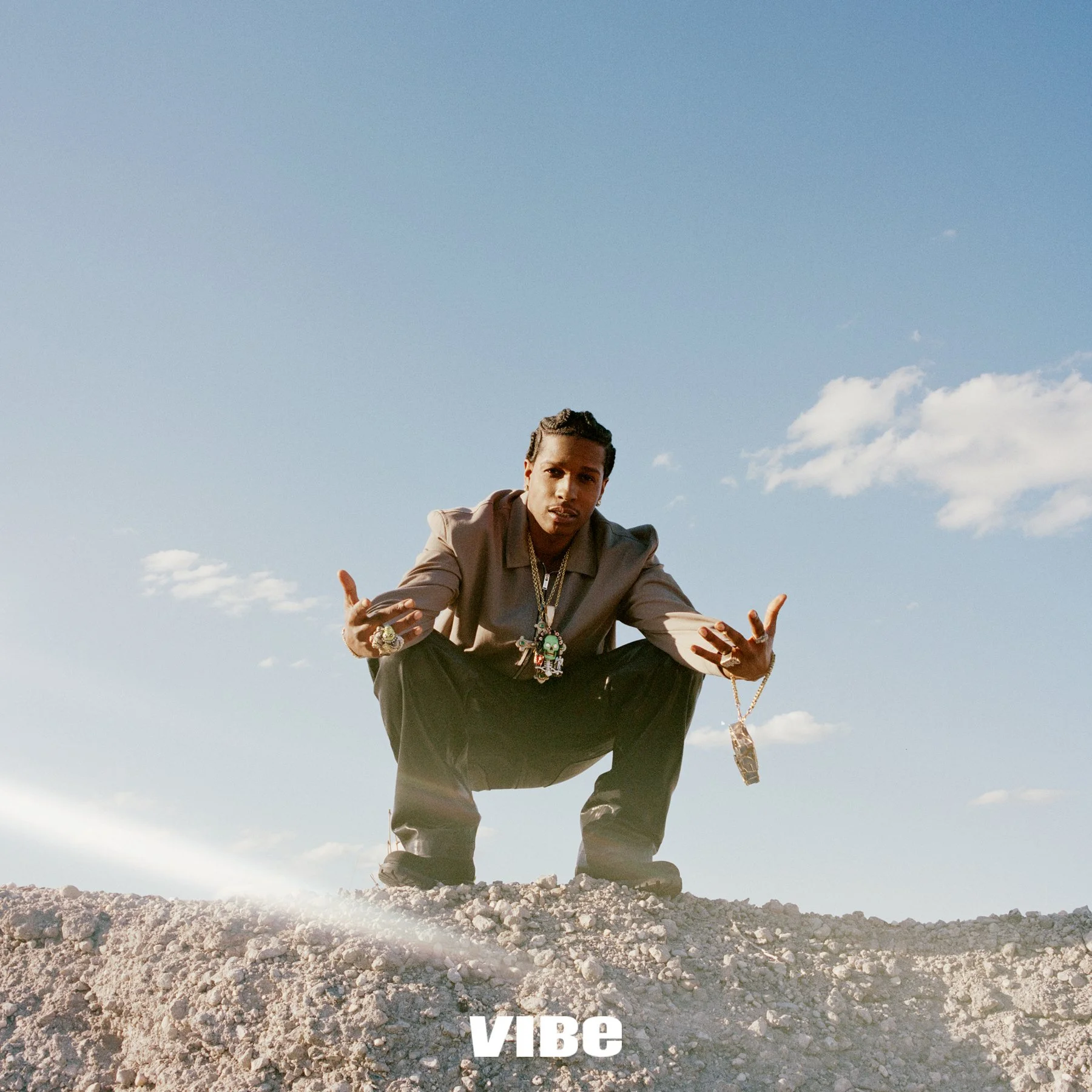
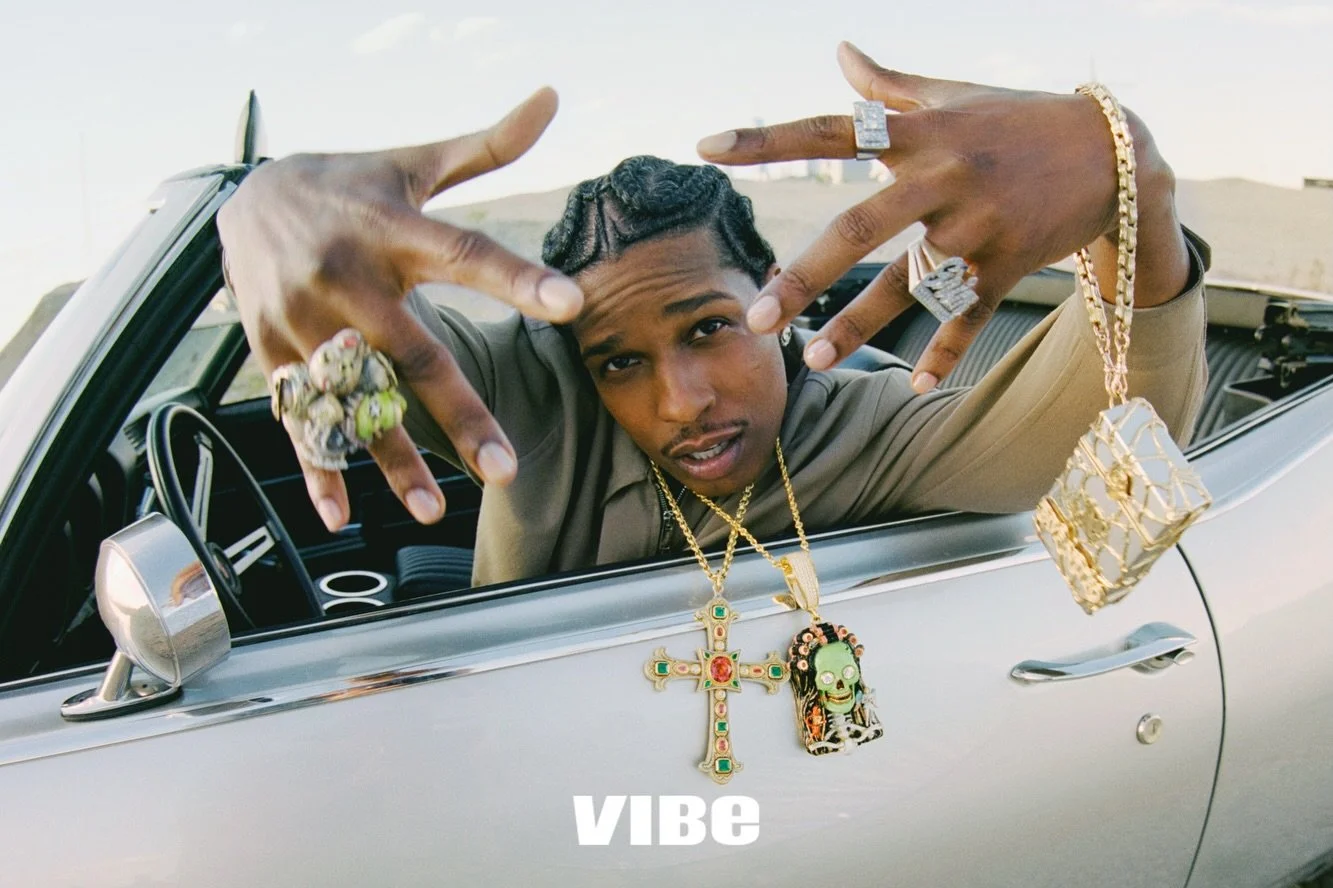
Top down, skyline washed out behind him, hands flashing to the camera. He wanted the rings in the frame — and they earn it.
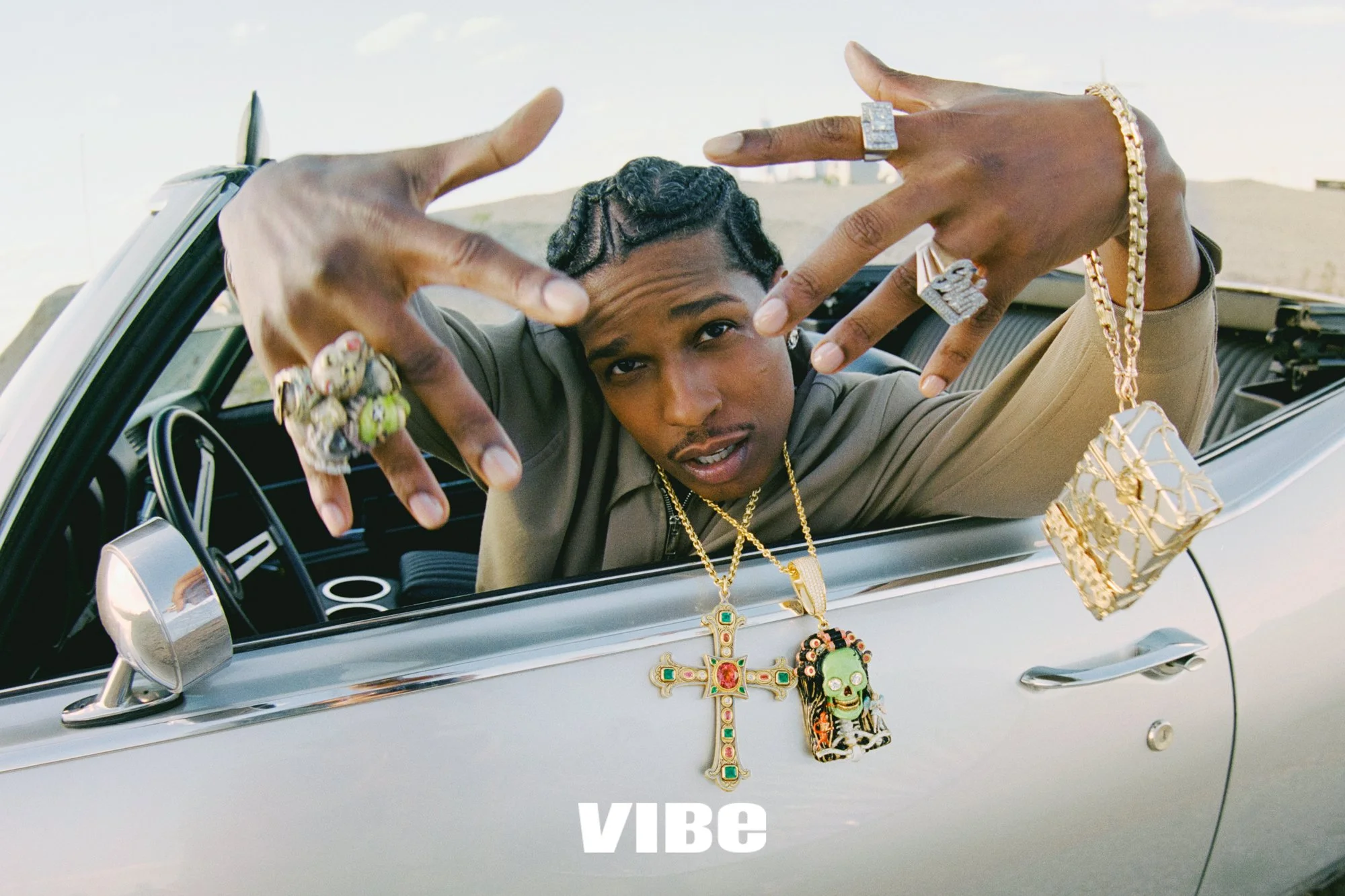
They come out of his Don't Be Dumb era: the alter egos and the "ghetto expressionism" he built out with Tim Burton, made real in metal. He had them cut by A. Codognato — the Venetian house that's been carving skulls and memento mori into gold since 1866 — bespoke, handmade rings in gold, enamel, and diamond, each one a different persona from the album, released under his own line, PAVĒ NITEŌ. Theatrical, dark, and old as the city that made them.
But I saw the pride before I saw the jewelry. The pose is all him; I just kept the lens wide enough to let it breathe.
The fisheye does what it does out here — pulls the whole block into the frame, bends the horizon, gives the city a curve. On the sand mound at the edge of the water, he's crouched, open-handed, welcoming.
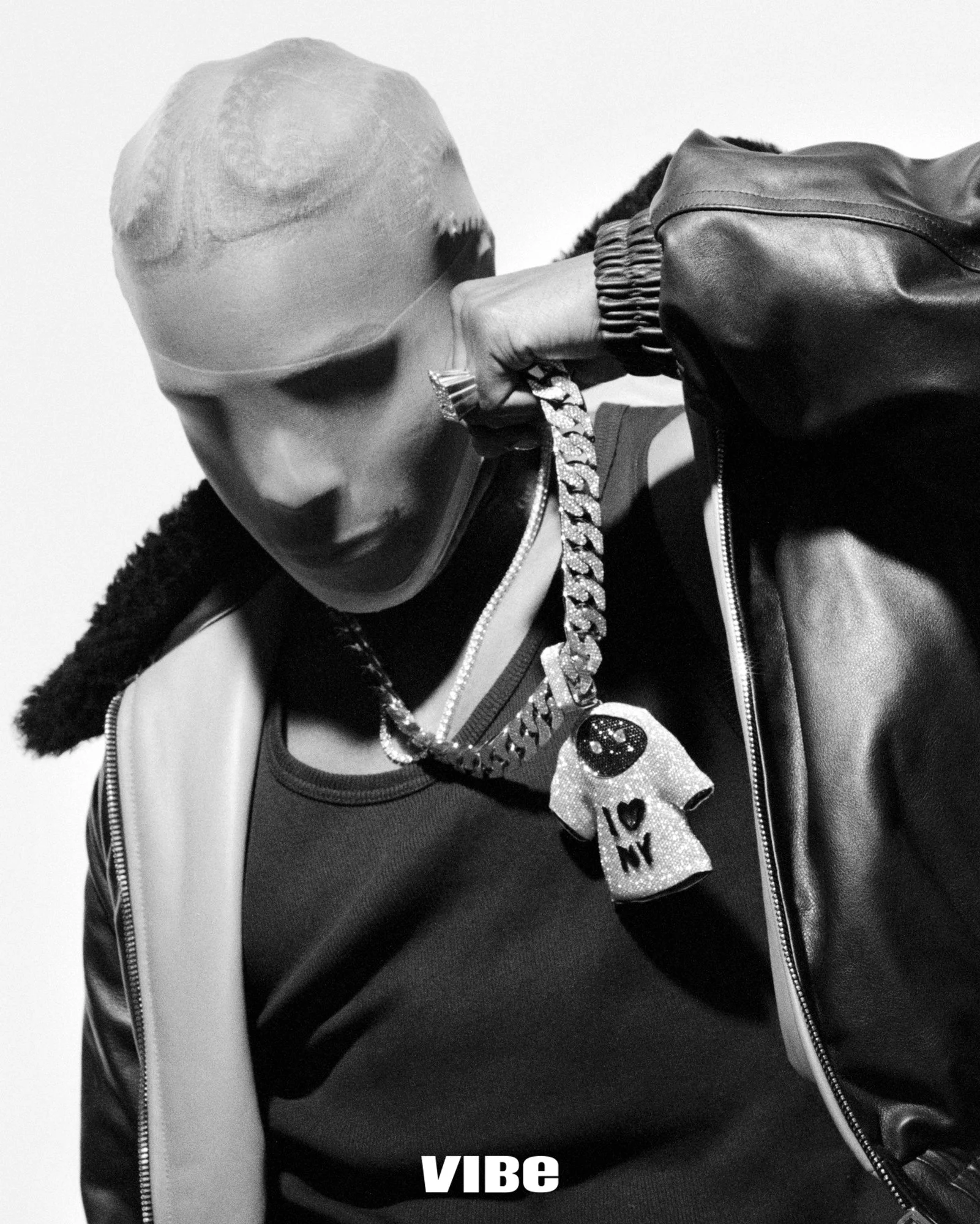
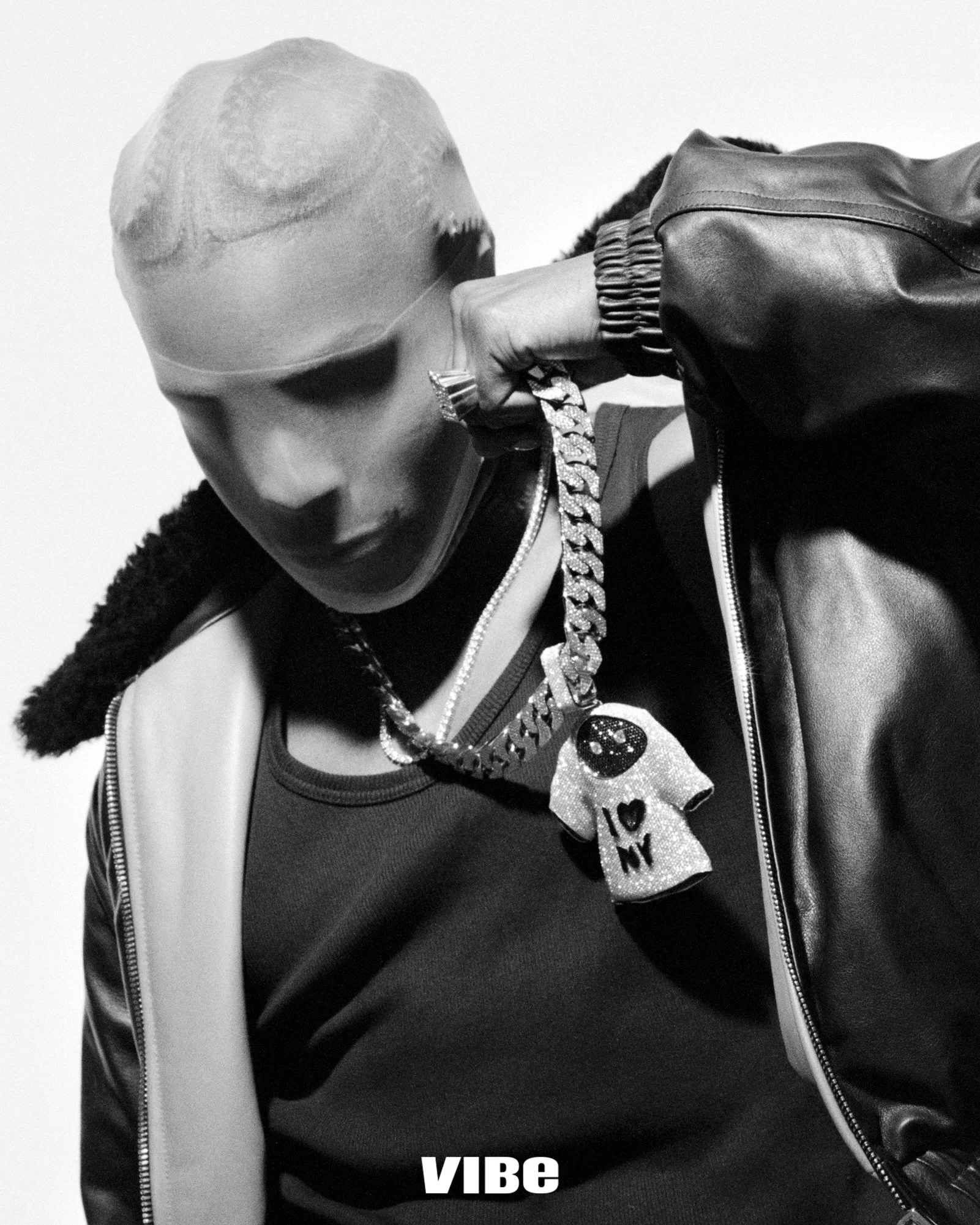
In the black-and-white studio frame, chains and leather, the register drops to something quieter and harder. Different tempers of the same afternoon.
The pose
There's a pose I've asked for my whole career. Arms out, wide open, ready to take the whole thing.
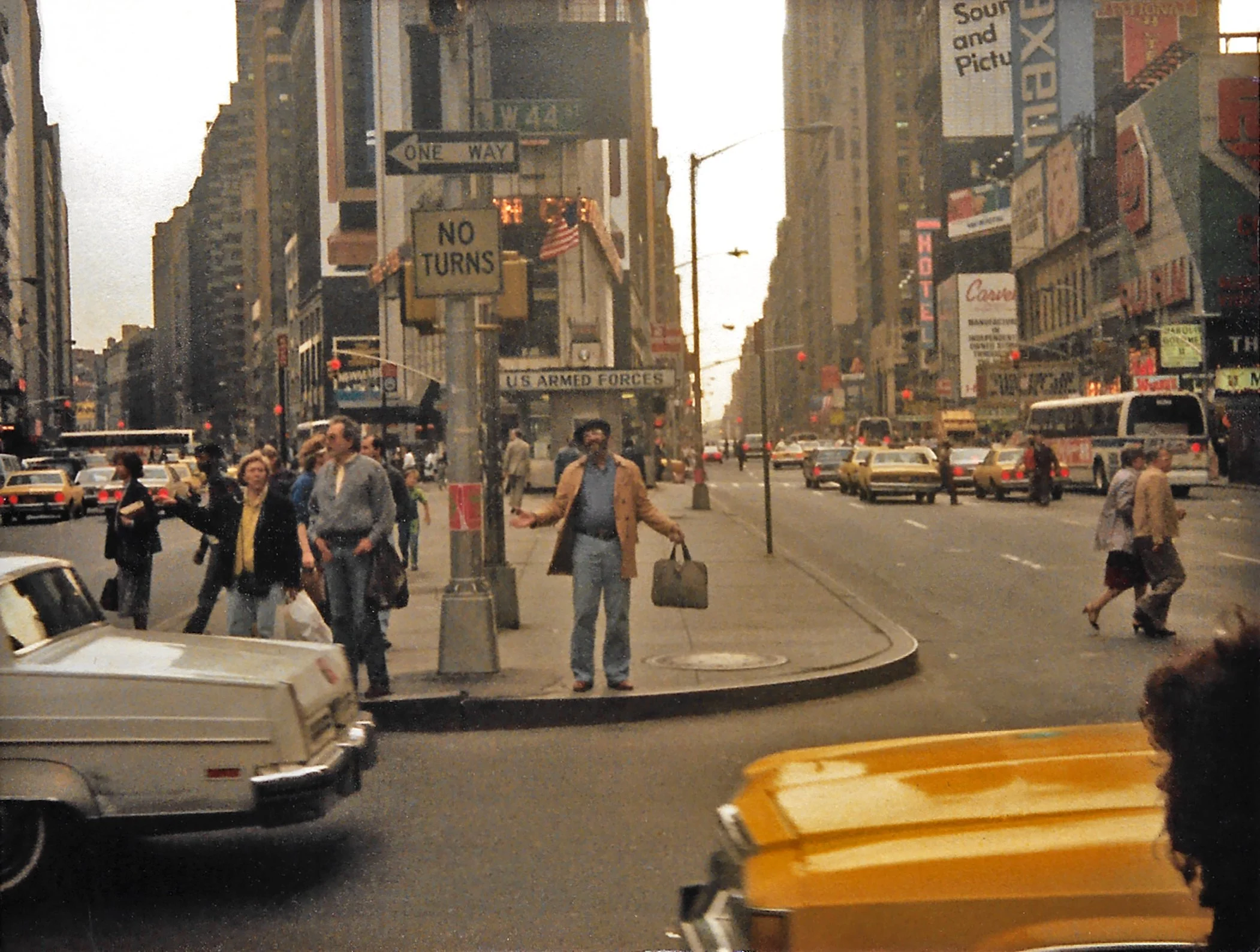
It goes back to my father, in Times Square. The first roll of color film I ever shot, on my first camera, I pointed at him. He's where my eye comes from — that first frame, and every frame since has been a version of it.
I've asked for the arms-out pose from Jay-Z. From Nas. From D'Angelo. And now from Rocky, under the Gowanus, red on green, ready to grasp the world.
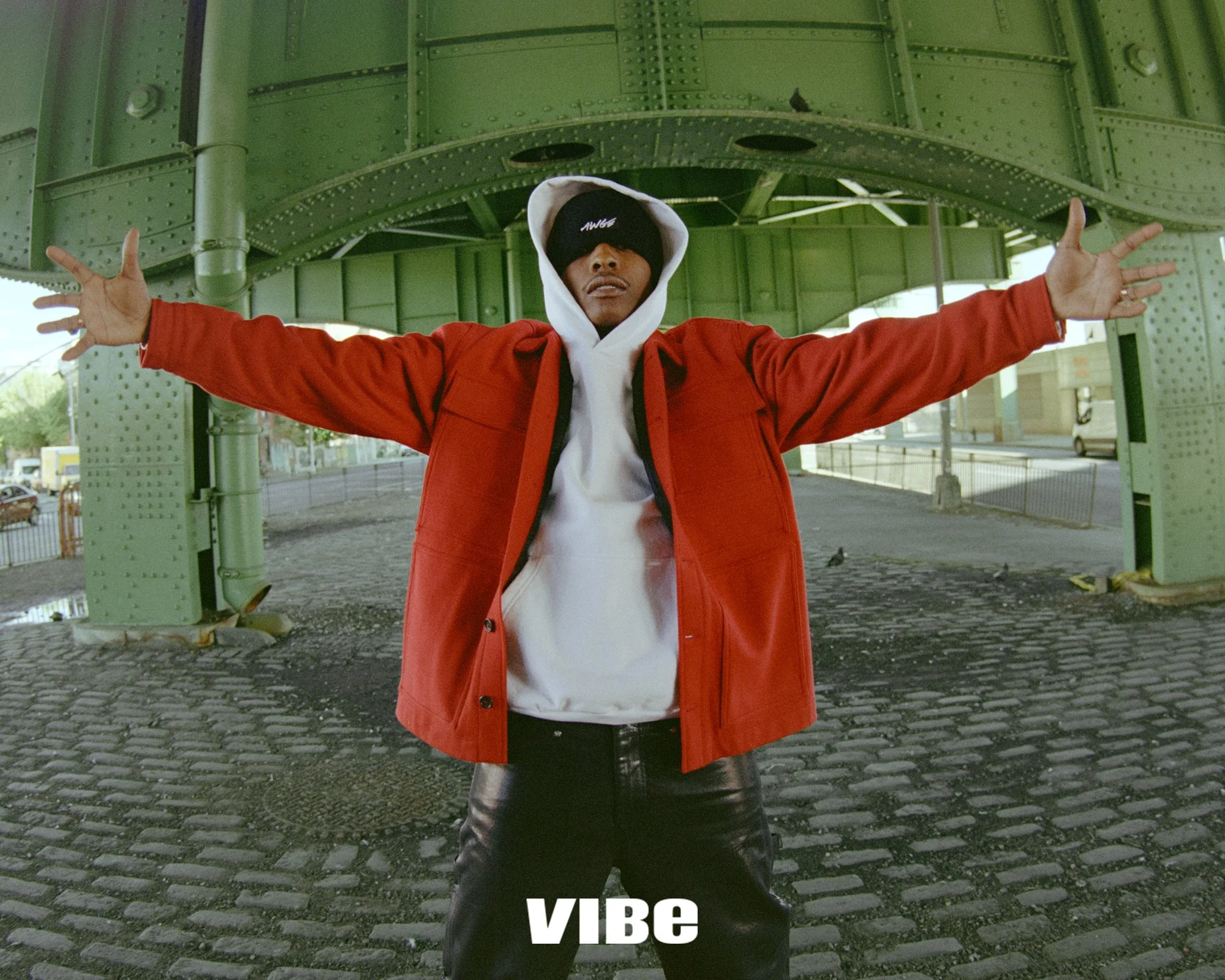
The pose is the throughline. It's how you can tell the archive and the work I'm making right now are the same continuous gesture — one long reach that started with my father and hasn't stopped.
Print is back
VIBE mattered because it was on paper. It sat on coffee tables, got passed hand to hand, went yellow at the edges and stayed. Bringing it back to print isn't nostalgia — it's putting the culture back into an object that lasts.
I'm proud to have shot the frame that announces it.
I don't usually stand in front of the lens. But I went down to the newsstand and sat with it — the cover blown up on the wall, the actual issues racked in rows on either side. Print, back where it belongs. For once I let someone point the camera at me.
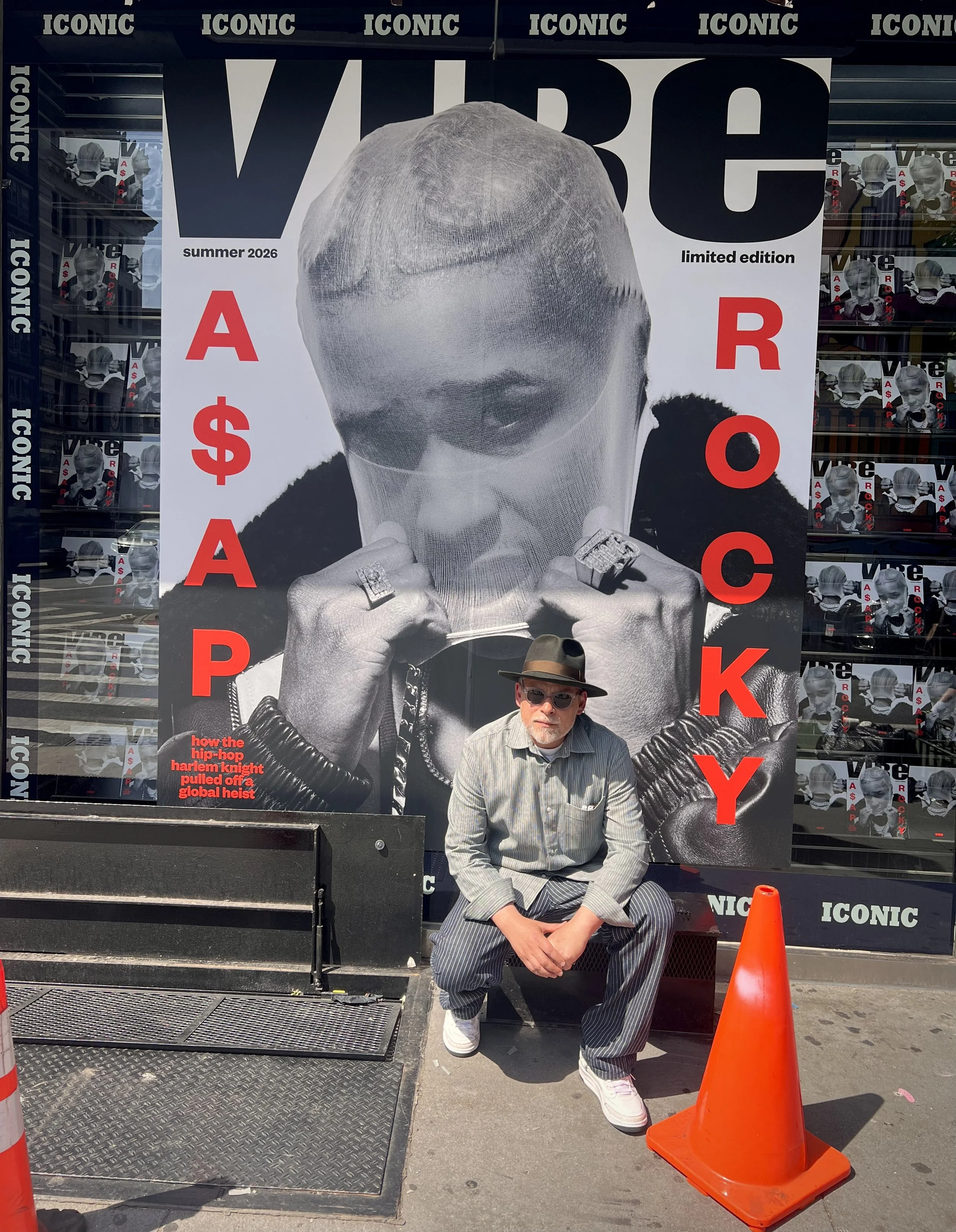
A$AP Rocky for VIBE. The return to print.
Jamil GS is a photographer whose work has documented Hip Hop and its visual culture across three decades.
CONTINUUM
Vibe returns to print. A new chapter begins.
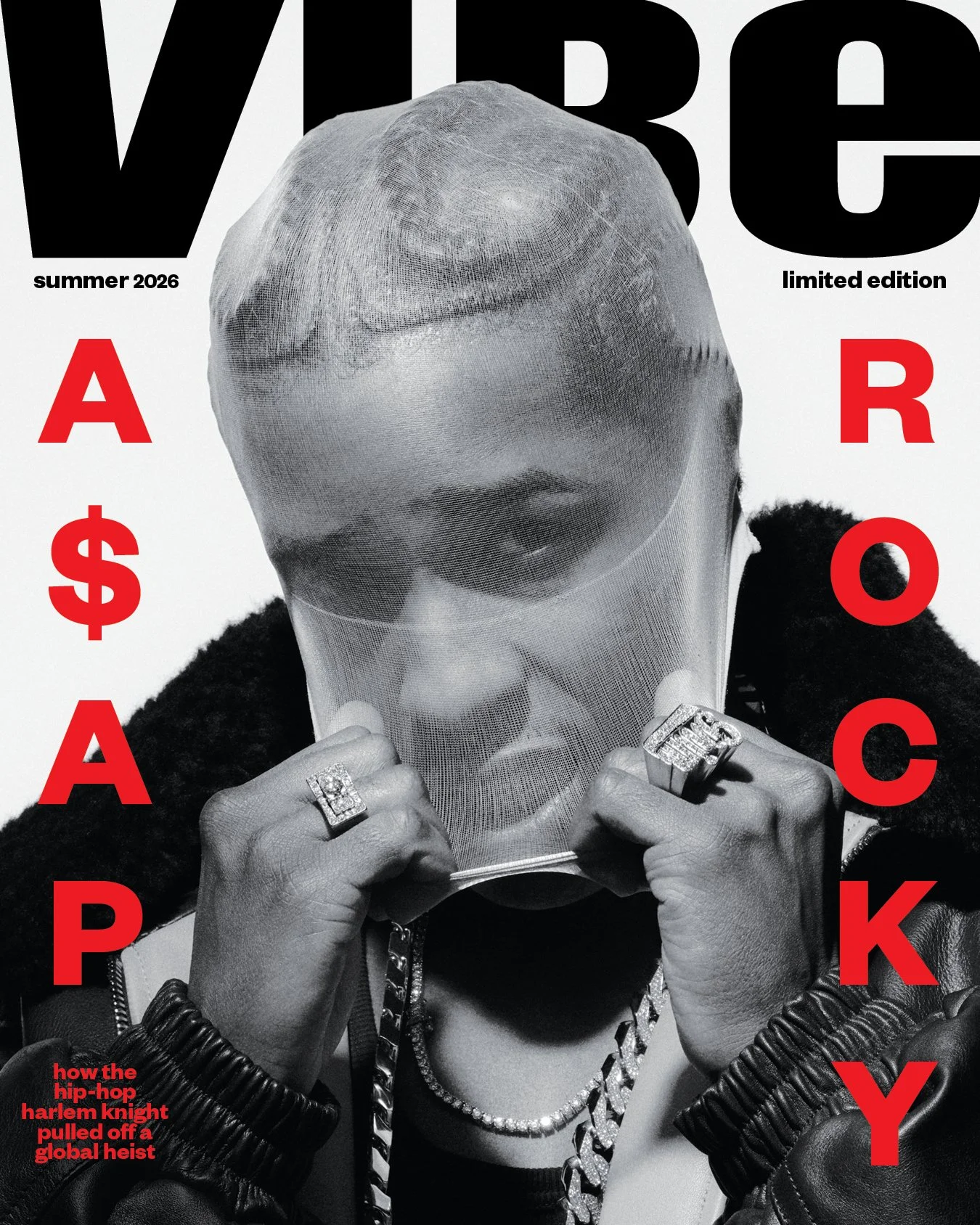
A$AP ROCKY, New York, 2026
Vibe returns to print this June after years away from the physical format.
The relaunch carries personal significance.
I began my own editorial journey within the pages of Vibe during the 1990s, contributing to the visual language surrounding a generation of artists, musicians, and cultural movements that would come to shape global culture for decades to come.
Now, years later, I was invited to create the first cover story for the magazine’s return to print — featuring one of the defining artists of the current generation at a moment where music, fashion, film, and cultural influence continue collapsing into one another in new ways.
What interests me most is not nostalgia, but continuity.
The same conversations around image-making, authorship, identity, mythology, and cultural memory continue evolving across generations. The archive remains alive precisely because culture itself remains alive.
As I prepare to reopen and reactivate decades of archival material in New York this summer, this moment feels less like a return and more like a bridge between eras — one ongoing visual conversation unfolding across time.
More soon.
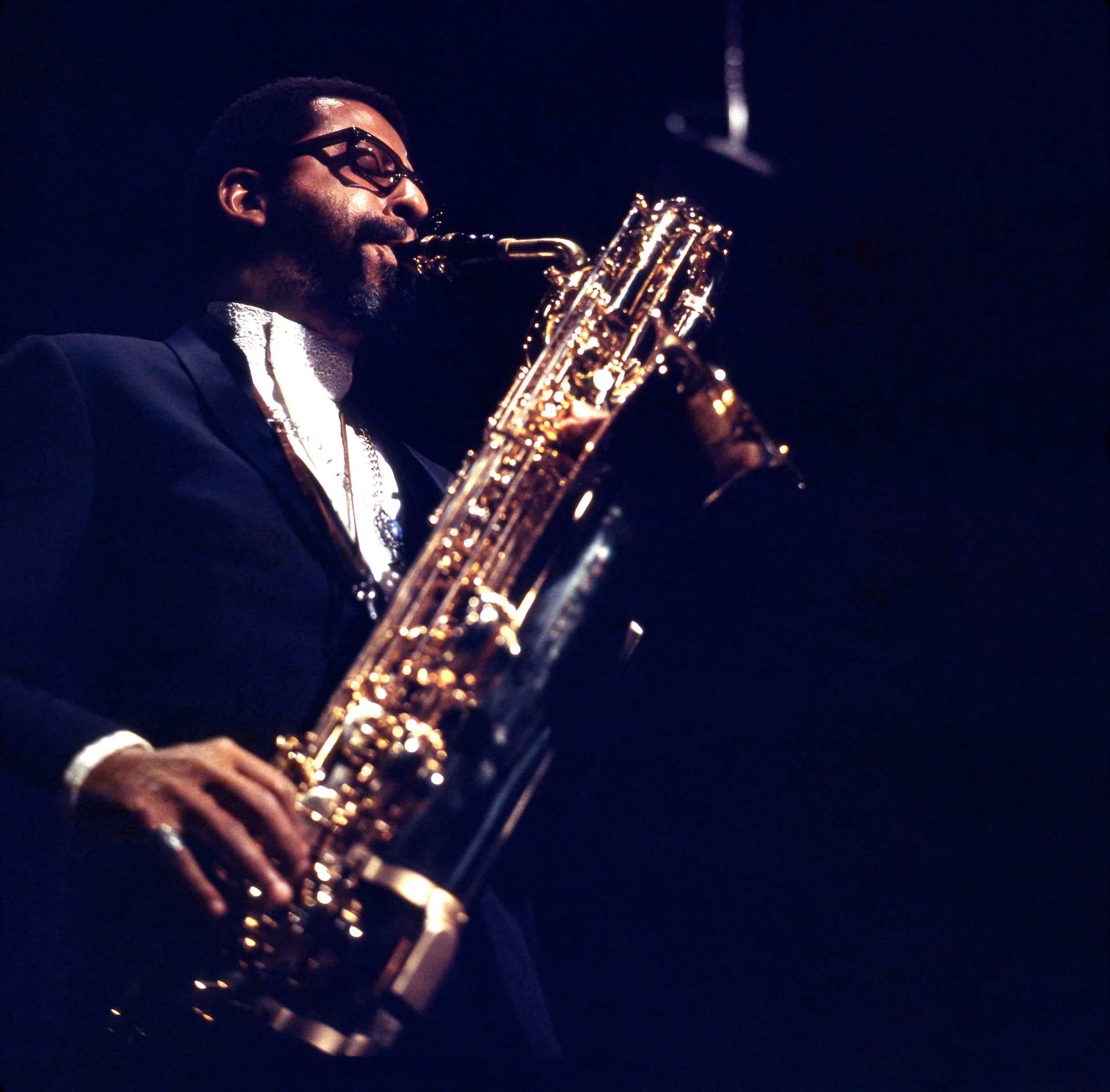
LWID — Vinterjazz 2026: Migration, Memory & the Making of Jazz in Denmark
LWID’s Vinterjazz 2026 feature connects migration, memory, and Jazz in Denmark—through Sahib Shihab and the continuum that follows. Jazz → Hip Hop → now.
Featured in LWID’s Vinterjazz 2026 column on migration, memory, and Jazz in Denmark—featuring my father, Sahib Shihab, and the wider lineage of Black American artists in Scandinavia. Jazz → Hip Hop → now - not as genres, but as authorship, movement, and a language that reshapes space.
Written by Pratik Hariharan
The story treats Jazz in Denmark as lived history, not nostalgia—a moving story carried through streets, venues, broadcasts, and daily life. It also preserves names, context, and attribution—the kind of storytelling that keeps histories from disappearing into “influence” without credit.
D’Angelo, Brown Sugar, and the Art of Holding Moments
Some artists don’t just release music — they recalibrate culture.
When D’Angelo emerged during the Brown Sugar era, it wasn’t simply a debut album. It was a quiet revolution in Black intimacy, vulnerability, and sonic honesty.
I had the rare opportunity to photograph D’Angelo during this formative moment — not as an observer chasing icons, but as a participant inside a cultural shift that would echo for decades.
Animal New York recently revisited this period in a thoughtful piece reflecting on D’Angelo’s Brown Sugar era. The article explores not only the music, but the emotional and visual atmosphere surrounding him at the time.
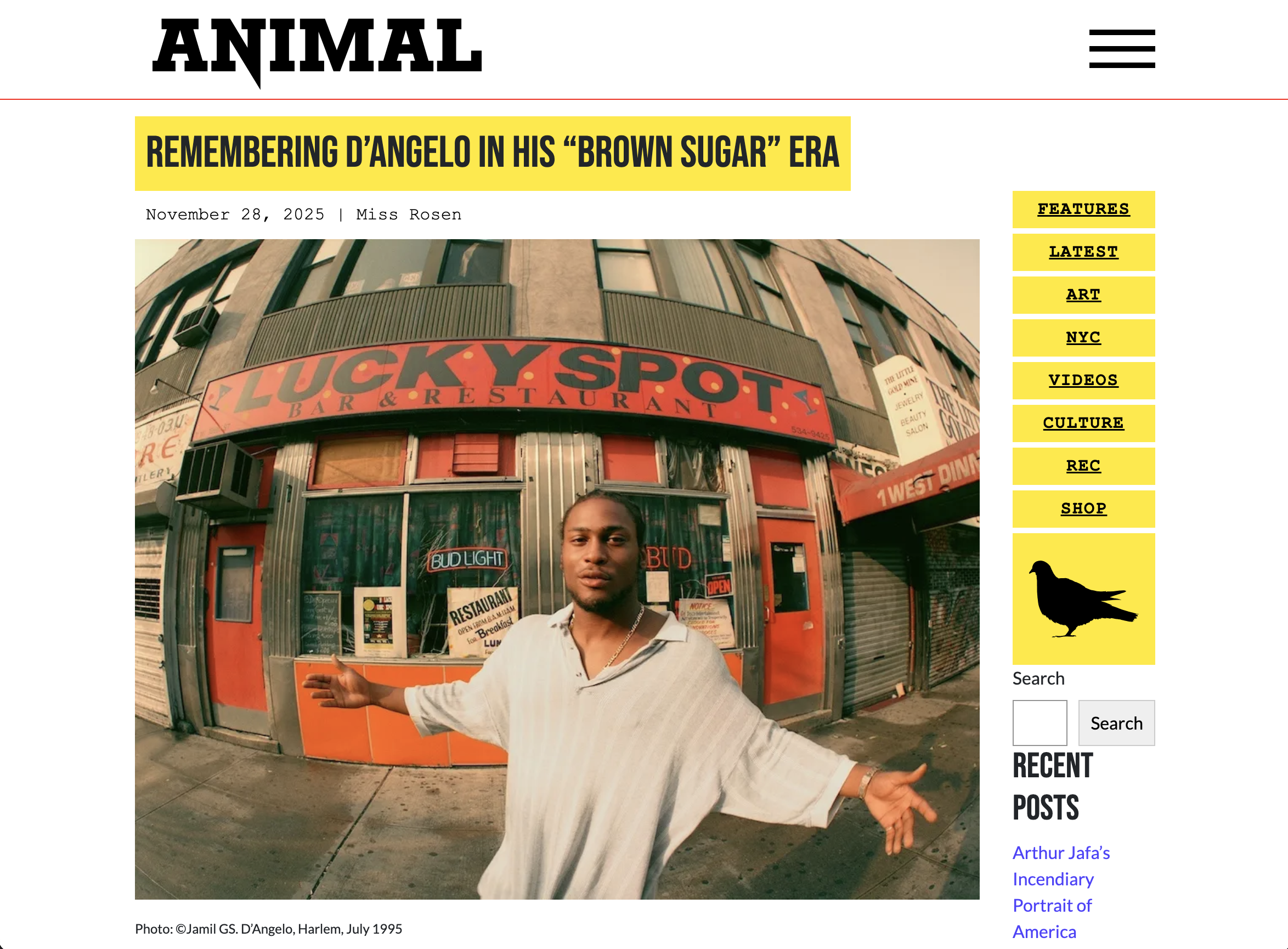
Click image for full story.
What struck me then — and still does now — was D’Angelo’s willingness to be seen without armor. There was no spectacle, no bravado. Just presence.
Photographing him during that era wasn’t about capturing a pose — it was about holding space for stillness. That restraint, in retrospect, feels as important as the music itself.
As I reflect on this moment now — three decades into my archive — I see these images not as nostalgia, but as living artifacts.
They continue to invite reinterpretation, conversation, and new forms — which is why I’ve recently begun collaborating with contemporary artists to reimagine archival work across illustration, animation, and digital space.
D’Angelo’s legacy isn’t frozen in time. It breathes through the artists he influenced, the courage he modeled, and the way his work continues to remind us that vulnerability can be revolutionary.
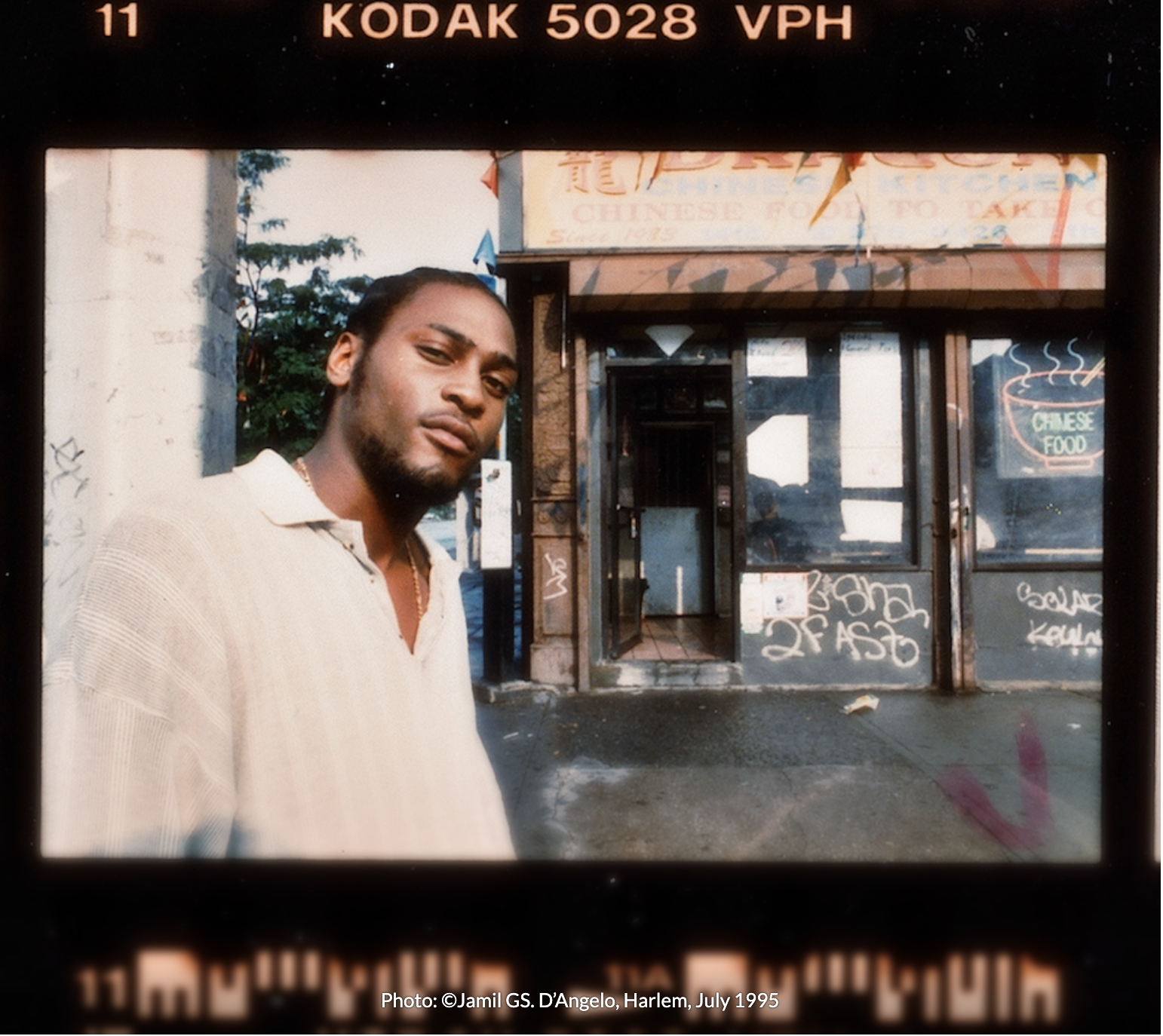
From the archive.
Remembering the Brown Sugar era isn’t about looking back — it’s about understanding how culture moves forward.
Some moments ask to be preserved. Others ask to be reactivated.
My work lives in that space — between memory and momentum.
More from the archive will be shared in the coming weeks.
THE LIGHT THAT TRAVELS — HONORING D’ANGELO & A NEW COLLABORATION WITH DAKARAI AKIL
Nearly three decades ago, in the heat and hum of a Harlem summer, I photographed a young artist on the cusp of becoming a global force. His name was Michael Eugene Archer, better known as D’Angelo.
Those frames from 1995 carry warmth, rhythm, and quiet gravity — the same qualities that lived in his voice. It was a moment suspended in light; a chapter of soul culture that felt both intimate and historic even as it unfolded.
When D’Angelo’s passing was announced, the world felt that shift. A light dimmed here — only to illuminate deeper in our memory, our music, and our hearts. I honored him the way I know best: through image, through story, through reflection. And in that space, the universe responded. Energy returned. Collectors reached out. Conversations began again. The work breathed.
Out of that moment came something unexpected and powerful — a bridge between eras.
I invited Dakarai Akil, an artist whose imagination and voice I respect, to reinterpret a portrait from my archive. Not as nostalgia, not as imitation — but as evolution.
He didn’t just remix the image.
He extended the vibration.
Through his hands, a photographs from this 1995 session found a new dimension in 2025 — a testament to what happens when legacy is not preserved in glass, but passed forward in trust.
This marks the first release in my ongoing project:
Reimagining Legacy — A New Cultural Remix
The intention is simple:
To honor the past while allowing the future to speak.
To open the archive — not as a museum, but as a living instrument.
To build bridges across generations of Black imagination and visual storytelling.
D’Angelo gave us music that still warms the soul like late-afternoon sunlight.
This collaboration is a way of keeping that warmth in motion — not frozen in time, but vibrating through new forms, new voices, new hands.
The archive lives.
The culture breathes.
The light keeps traveling.
— Jamil GS
Danish Originals
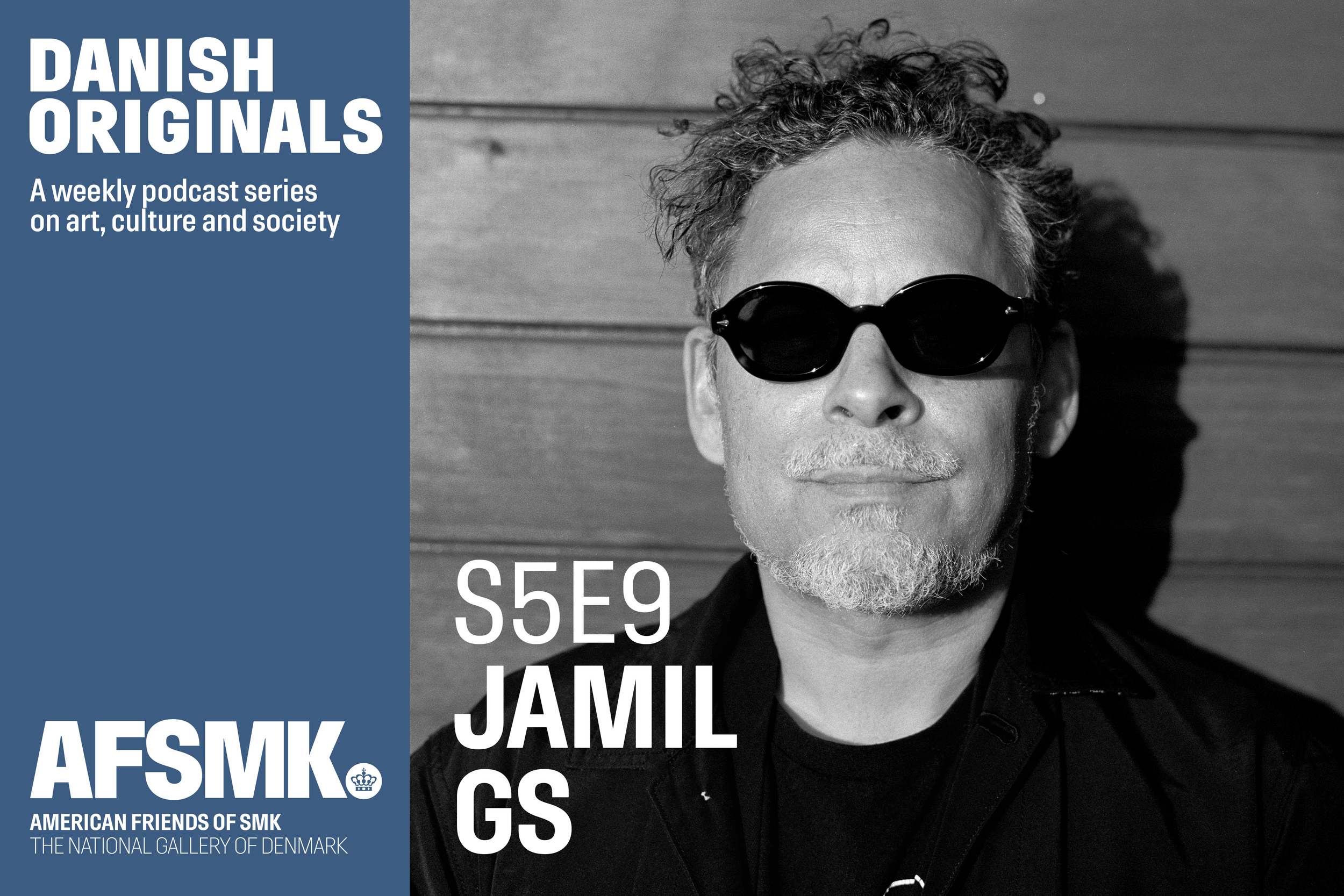
🎙️ Excited to Share This!
From my home in Nordvest, Copenhagen, I had the pleasure of sitting down with the talented journalist Tina Jøhnk Christensen for the latest episode of Danish Originals. We covered a lot—from my time growing up bi-cultural between Denmark and Los Angeles to capturing hip-hop and street culture in 1990s New York.
We also explored the political and cultural parallels between the USA and Denmark, the impact of art and frequencies, and my initiative Young Stringers, which empowers immigrant youth through storytelling.
Along the way, we touched on the legends who shaped the soundtrack of that era—Beastie Boys, AZ, Chuck D, Drake, D'Angelo, Donald Byrd, Faith Evans, Foxy Brown, Ghostface Killah, Geto Boys, Jay-Z, Juvenile, Mary J. Blige, Nas, RZA, Raekwon, Yasiin Bey—and the places that defined it: Harlem, Brooklyn, Manhattan, East LA, Atlanta, New Orleans, and Jamaica.
🎧 It’s a quick listen, but packed with stories about jazz, hip-hop, funk, reggae, graffiti, photography, skateboarding, and the deeper meaning of authenticity and spiritual homecomings.
Check it out here: https://lnkd.in/eq3Xvn9G
Would love to hear your thoughts—what resonated with you the most? 👇🏽
Title: Boriqua Girls of the Bronx: A Legacy Born in the Streets
Title: Boriqua Girls of the Bronx: A Legacy Born in the Streets

It’s a pleasure to get an opportunity to collaborate with Sara Rosen and i-D on this story.
The shoot was a milestone for myself and for the culture as well.
In 1995, the fashion world was at a crossroads. “Heroin chic” dominated the industry, a stark and narrow vision of beauty that left little room for diversity or authenticity. But for those who dared to look beyond the runways and into the streets, a richer, more vibrant story was waiting to be told.
Enter Jamil GS—a visionary armed with a camera, a love for hip-hop, and an unyielding belief in the beauty of multiculturalism. Born in Copenhagen and raised on the sounds of bebop jazz from his father, Sahib Shihab, Jamil fell in love with the culture of Harlem during a visit in the early 80s. That love grew into a devotion to hip-hop and its four elements: DJing, MCing, graffiti, and breakdancing. After swapping a spray can for the camera his father gifted him at 16, Jamil moved to New York in 1990, determined to carve his own path in photography.
By 1994, Jamil’s unique voice began to take shape. While working with acclaimed fashion photographer Patrik Andersson, he learned the art of high fashion photography. But when the workday ended, Jamil found his inspiration in the hip-hop clubs, not fashion parties. “I didn’t want to ignore fashion,” he recalls, “I just wanted to show it my way.”
The Birth of Boriqua Girls of the Bronx
It was this drive that led Jamil to pitch his first story to i-D magazine: Boriqua Girls of the Bronx. Far removed from the gaunt ideals of the time, this fashion editorial celebrated the bold, unapologetic style of Puerto Rican women from the Bronx. Alongside makeup artist Sade Boyewa El, hairstylists Chuck Amos and Pep Gay, and stylist Bernadette Van Huy, Jamil set out to capture a vision of beauty shaped by the streets.
Armed with nothing but passion, thrifted finds, and a dream, the team turned New York’s Lower East Side into their studio. The Williamsburg Bridge, East River Park, and Clinton Street became backdrops for a story that paired Comme des Garçons and Gucci with gold chains, door knocker earrings, and—most daring of all—Nike sneakers.
“We Were Innovators”
The shoot wasn’t just a celebration of style; it was a declaration of independence. “We didn’t have the resources other photographers had,” remembers Sade. “But that made our work raw and real. It wasn’t Vogue. It was strictly street.”
The models—Yalitza Rodriguez, Mai-Ling, Assia, Anette, and Sally—brought their own fire to the project. Bronx-born and full of life, they embodied the DIY spirit of hip-hop. Yalitza, a teen model at the time, recalls the electric energy of the shoot. “We didn’t have much, but we had so much fun. It was our playground.”
The editorial, published in i-D’s May 1995 issue, broke boundaries. It challenged the conventions of high fashion by embracing streetwear, multiculturalism, and the raw beauty of the Bronx. The inclusion of sneakers—a staple of hip-hop culture but a rarity in fashion spreads—marked a turning point for the industry.
A Lasting Legacy
Jamil GS’s work on Boriqua Girls of the Bronx wasn’t just a moment in time; it was the beginning of a movement. Over the years, Jamil’s lens continued to celebrate the intersections of culture, fashion, and art. From capturing icons like Jay-Z and Drake to collaborating with brands like Supreme and Hysteric Glamour, Jamil has consistently blurred the lines between commercial and fine art.
Today, the legacy of Boriqua Girls lives on. In exhibitions like Frequencies at MILAAP, Jamil’s early work is framed alongside portraits of jazz greats, hip-hop legends, and contemporary stars. The throughline? A commitment to showcasing the beauty of the people and cultures often overlooked by mainstream fashion.
“I saw all this beauty around me,” Jamil says, reflecting on his career. “And I was driven by what I wanted to see. We weren’t waiting around for someone else’s platform. We were the platform.”
To enjoy the full story and original article as well as previously unpublished photos click here